 Saas
SaasHubSpot CRM vs Pipedrive (2026): which CRM wins the bout
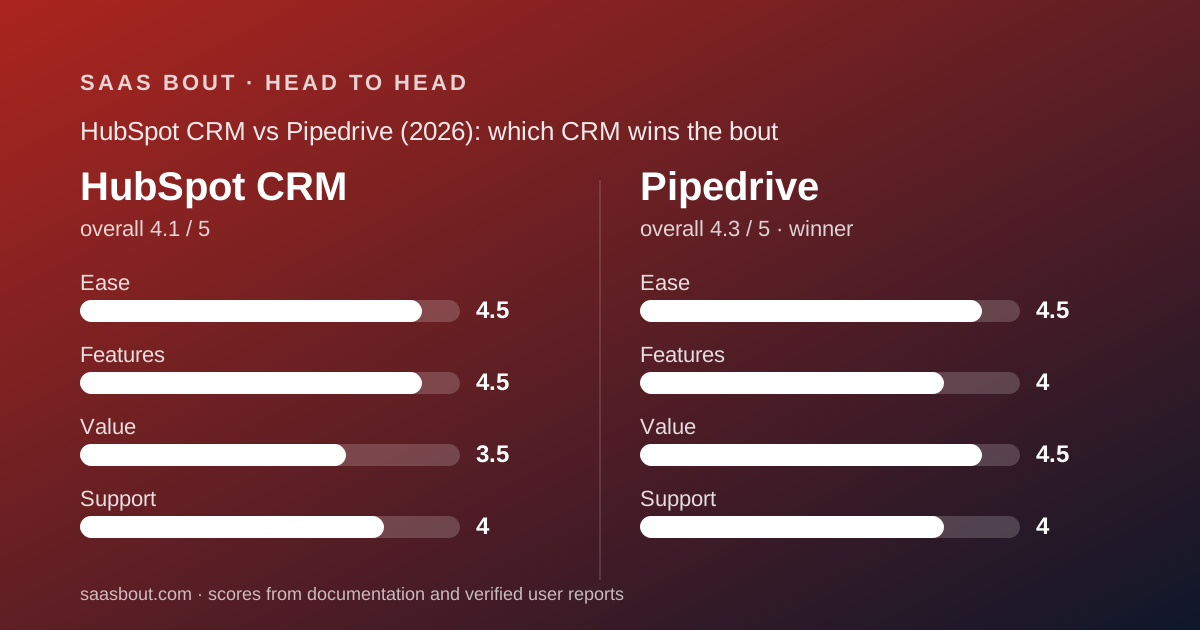
Pipedrive wins this bout on points, 34 to 33 on our four-round card, by taking the value round 9 to 7 while HubSpot takes support 8 to 8 even and ties ease and features. Both scorecards are built from the vendors' pricing pages, catalogs and knowledge bases plus verified user reports, all read on October 10, 2026. No paid trials, no staged demos. If you are 2 people, HubSpot's free tier settles it. If you are 5 to 30 reps who sell from a pipeline, Pipedrive Growth at $24 per seat does what HubSpot charges $100 per seat for.
 4.1HubSpot CRM
 4.3Pipedrive
The short answer
Pipedrive takes the bout on points. The card reads 9-9, 9-8, 7-9, 8-8, which is 33 for HubSpot and 34 for Pipedrive. One round decided it, and that round was value at a realistic team size.
This is a documentation bout. Every figure below comes from HubSpot's pricing pages, Product and Services Catalog and Knowledge Base, from Pipedrive's pricing page and usage limits table, and from verified reviews on Capterra, all read on October 10, 2026. Nothing comes from a paid trial or a staged demo.
- HubSpot CRM is best for 2-person teams who want a free CRM, and for companies where marketing already runs HubSpot and sales needs the same contact record
- Pipedrive is best for 5 to 30 reps who sell from a visual pipeline and want automations, email sync and 24/7 chat support for $24 per seat with no onboarding fee
- Winner: Pipedrive, 34 to 33. Read the full Pipedrive scorecard and the full HubSpot CRM scorecard for each fighter alone
Round 1, ease: both fighters score 9, for opposite reasons
Ease is scored even at 9 apiece, and the reasons do not overlap.
HubSpot earns its 9 on the way in. The free tier means a team is inside the real product in minutes, with Gmail, Google Workspace and Outlook integration switched on from day one, per the CRM pricing page. HubSpot Academy is free to every account. Capterra reviewers rate ease of use at 4.4 of 5 across 4,491 reviews and repeatedly credit the training.
Pipedrive earns its 9 on the job. The product is one pipeline, one leads inbox and one activity feed, and Capterra reviewers rate ease of use at 4.5 of 5 across 3,062 reviews. Several describe implementing it across a 100-person company without a consultancy.
Where each drops its point: HubSpot is a platform with five Hubs, and reviewers describe setup running longer than planned while the team learned where things lived. Pipedrive's automation builder draws repeated comments about being powerful but unintuitive, and its mobile app draws navigation complaints.
Round scored even. If your team has never run a CRM, HubSpot's free tier is the softer landing. If your team has run one before and wants fewer screens, Pipedrive is.
Round 2, features: HubSpot takes it 9 to 8 on breadth and integrations
HubSpot wins the features round on documented breadth.
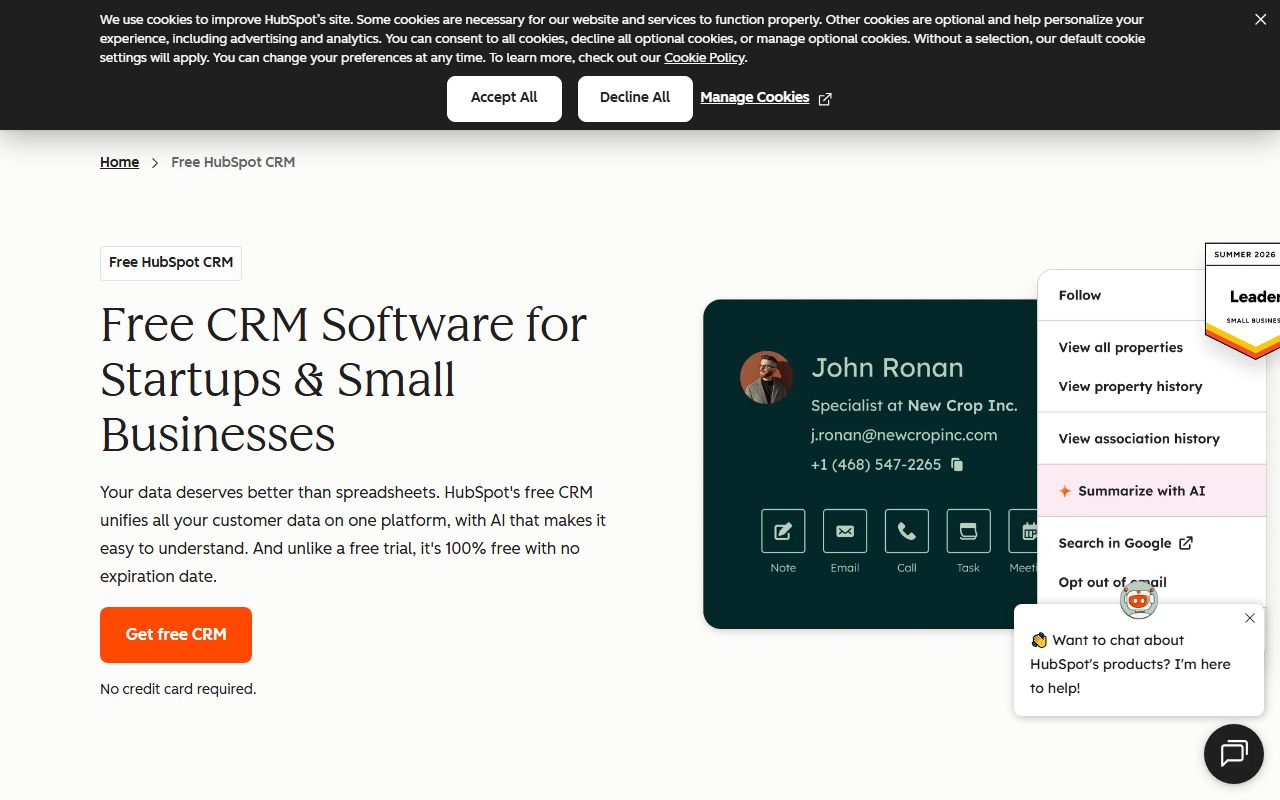
Within Sales Hub alone, the Product and Services Catalog lists sequences capped at 5,000 per account, playbooks up to 5,000 on the top tier, calling minutes from 500 to 12,000 per month, custom reporting, forecasting across team hierarchies and goal tracking. The product page lists more than 2,000 Marketplace apps. And the free tier already includes deal pipelines, a reporting dashboard and the Breeze Assistant.
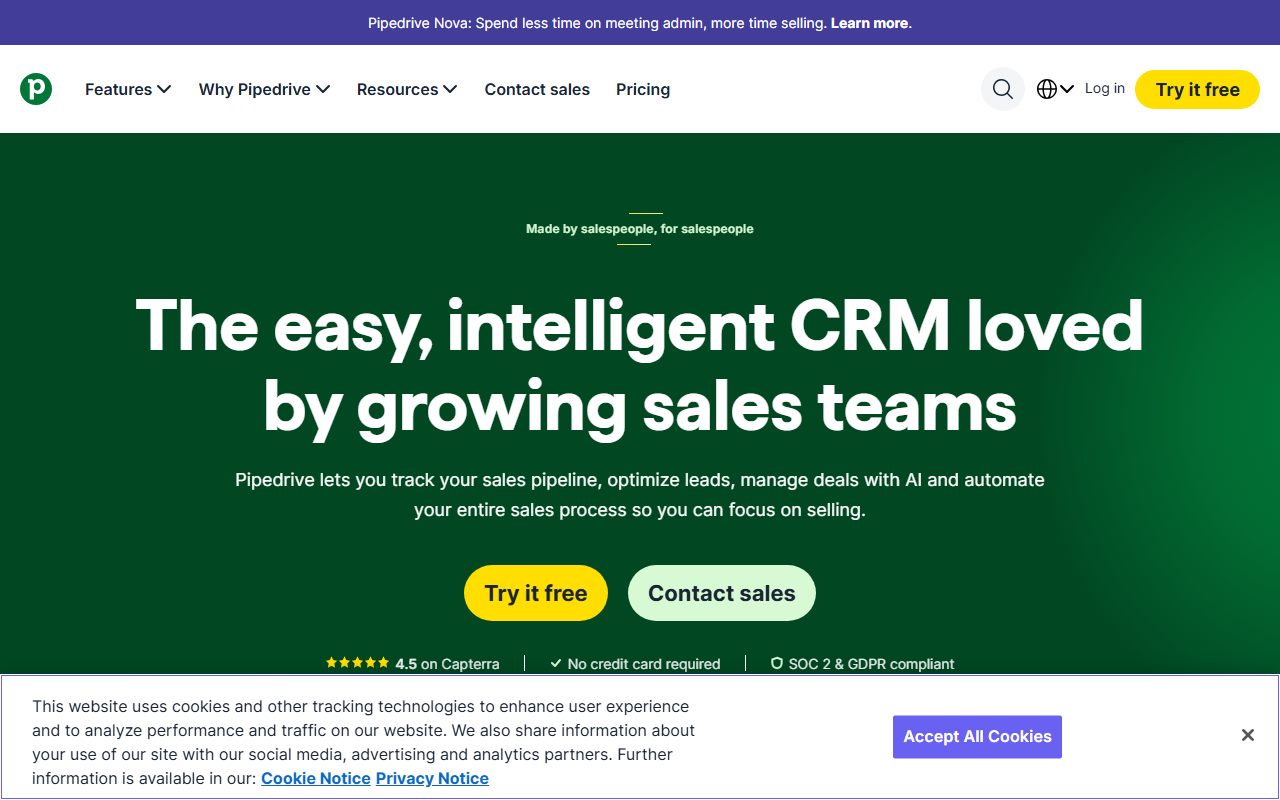
Pipedrive's feature set is narrower by design. Unlimited customizable pipelines on every plan, automations with delay and if-else steps from Growth, sequences from Growth, lead routing and custom scoring from Premium, a sandbox on Ultimate. Integrations are 500-plus per the pricing page, with REST API, webhooks and an MCP server on every tier.
The gap that costs Pipedrive the point is scope. Lite has no automations and no two-way email sync. Marketing email, web visitor tracking and chatbots are paid add-ons on every plan, from $13.33, $41 and $32.50 per month respectively. HubSpot ships marketing tools in the same database, even if a Marketing Hub seat costs extra to use them fully.
The counterweight: HubSpot's Starter workflows have restricted triggers and actions, per the catalog. Pipedrive Growth gives you 50 real automations at $24. For a pure sales team, the practical feature gap at the price most teams pay is smaller than the catalog suggests. The round still goes to HubSpot, 9 to 8.
Round 3, value: Pipedrive takes it 9 to 7 at every size above two seats
Value decided this bout. We score it at 10 seats, and we check 2, 5 and 20 as well.
At 2 seats, HubSpot wins outright. Free, 1,000 contacts, no expiry, per the pricing page. Pipedrive Lite costs $336 per year for the same team, with no email sync.
At 5 seats, Pipedrive Growth is $120 per month billed annually and includes full email sync, automations and sequences. HubSpot Starter at the $20 list price is $100 per month, but its workflows carry restricted triggers and actions and support is email only. To match Growth's automation, HubSpot needs Professional: $500 per month plus $1,500 onboarding.
At 10 seats, our editorial arithmetic from the published prices: Pipedrive Growth $2,880 per year, Premium $5,880, Ultimate $8,280. HubSpot Starter $2,400 per year at list, Professional $12,000 plus $1,500, Enterprise $18,000 plus $3,500.
At 20 seats, the Professional gap is $24,000 plus onboarding against Pipedrive Premium at $11,760, and Premium bundles LeadBooster, Projects and Smart Docs.
HubSpot keeps a 7 rather than lower because of the free tier, free view-only seats, no seat minimums since March 5, 2024 and the fact that one subscription can replace marketing and service tools. For a sales team buying a sales tool, those do not close a four-fold gap. Round to Pipedrive, 9 to 7. The fight card tabulates every size.
Round 4, support: scored 8 each, Pipedrive wider at the bottom, HubSpot clearer at the top
Support is scored even at 8, and this round depends on which plan you buy.
HubSpot publishes channels per tier on the Sales Hub pricing page, checked October 10, 2026. Free gets the Community, Academy and Knowledge Base. Starter gets email. Professional and Enterprise get email and phone. Paid onboarding on the two upper tiers is mandatory and the fee is separate.
Pipedrive lists the Knowledge Base and Academy, a 24/7 chatbot and 24/7 live chat with a human team on all four plans, per the pricing page support section. Phone support is by call request, with extended hours of Monday to Friday 7:00 to 23:00 CET on Ultimate only. Upper tiers list personalized onboarding and eligibility for a dedicated customer success manager, subject to qualification.
At the bottom of the price list, Pipedrive is clearly ahead: a $14 Lite seat gets 24/7 live chat, a $20 HubSpot Starter seat gets email. At the top, HubSpot's phone channel is explicit on Professional and Enterprise, while Pipedrive does not state standard phone hours below Ultimate.
Both carry 2026 reviewer complaints. HubSpot's are about the gap between sales promises and onboarding delivery. Pipedrive's are about features gated behind upgrades after support interventions. Both vendors respond publicly. Neither pattern is quantifiable from the sample, so neither moves the score. Round even, 8 to 8.
What verified users report
The two fighters hold the same headline rating on Capterra, 4.5 of 5, HubSpot across 4,491 reviews updated September 30, 2026 and Pipedrive across 3,062 reviews updated October 10, 2026.
HubSpot reviewers praise the intuitive interface, integrations, free training and the single record shared across marketing and sales. They complain about cost rising with contacts and tiers, small businesses feeling priced out at the Professional step, duplicate records after imports, and onboarding expectations.
Pipedrive reviewers praise the visual pipeline, fast adoption without an agency, automations that save time and clean Gmail and Outlook integration. Several describe switching from HubSpot's free plan because the first paid tier did not fit a 3-person team. They complain about reporting depth, the automation learning curve, the mobile app and campaign deliverability.
These are themes across large samples, not quotes we can verify individually, and they match the published documentation: HubSpot's cost curve and Pipedrive's narrower scope are both visible on the pricing pages.
Limits side by side: the caps you will actually hit
Scores are built from published limits, so here are the ones a 10-person team meets first, read from Pipedrive's usage table and HubSpot's catalog on October 10, 2026.
Pipedrive publishes its caps on the pricing page in one table. HubSpot's live in a 225,000-character catalog, and some rows list two values without naming the tier. Where the mapping is unclear we say so.
- Automations: Pipedrive Growth 50 active per company, Premium 150, Ultimate 250. HubSpot Starter 50 workflows with restricted triggers, Professional 300, Enterprise 1,000
- Sequences: Pipedrive Growth 5 per company, Premium 25, Ultimate 50. HubSpot Professional and Enterprise 5,000 per account, with 500 or 1,000 email sends per user per day
- Custom fields: Pipedrive 30, 100, 300, 500 per company by plan. HubSpot does not cap custom properties in the Sales Hub section we read
- Reports: Pipedrive 15, 50, 250, 500 per seat. HubSpot catalog lists 100 and 500 custom reports across the upper tiers without a clean mapping
- Email sync: Pipedrive 1 account per seat on Growth, 3 on Premium, 5 on Ultimate; none on Lite. HubSpot includes Gmail, Google Workspace and Outlook on the free tier
- Calling: HubSpot 500, 3,000 and 12,000 minutes per month by tier. Pipedrive has no native calling minutes; it lists CloudTalk and JustCall integrations
- Pipelines and dashboards: HubSpot 15 pipelines and 30 dashboards on Starter, 100 and 75 on Professional, 350 and 100 on Enterprise. Pipedrive lists unlimited pipelines on every plan
- API: Pipedrive 30,000 to 210,000 tokens per seat per day by plan. HubSpot's API limits sit in a separate developer document we did not score
Choose HubSpot CRM if
The heavyweight is the right pick when the free tier or the shared database is the deciding factor.
- You are 2 people with under 1,000 contacts and want a serious CRM for nothing, with no trial clock
- Marketing already runs on HubSpot and sales needs the same contact record without a sync layer
- Your buying committee reads but does not edit, so free view-only seats cover managers and finance
- You will buy Professional within a year regardless and the $1,500 onboarding fee is already in the budget
Choose Pipedrive if
The specialist is the right pick when the pipeline is the product you are buying.
- You have 5 to 30 reps who sell stage by stage and want automations and email sync at $24 per seat
- You refuse onboarding fees and seat minimums, because Pipedrive lists neither
- You want every usage cap printed before you sign, which Pipedrive's pricing page does
- You want 24/7 live chat on the cheapest plan, which HubSpot does not offer below Professional by phone or on Starter at all
Frequently asked
Can I switch from HubSpot to Pipedrive? Yes. Pipedrive's pricing page lists data import from spreadsheets and migration from HubSpot, Salesforce and Zoho among its features on every plan. Export your contacts, companies and deals from HubSpot first, and expect to rebuild automations by hand, since neither vendor migrates workflows.
Which is cheaper for a 10-person team? Pipedrive on every like-for-like tier above free. Growth is $2,880 per year against HubSpot Professional at $12,000 plus $1,500 onboarding. HubSpot Starter at list is $2,400 per year, cheaper than Growth, but with restricted workflows and email-only support. Editorial arithmetic from the pricing pages, October 2026.
Which has the better free option? HubSpot. Its free tier covers 2 users and 1,000 contacts with no expiry. Pipedrive offers a 14-day trial only.
Which integrates with more tools? HubSpot lists 2,000-plus Marketplace apps against Pipedrive's 500-plus. Both offer an API and webhooks; Pipedrive includes them on its cheapest plan.
Bottom line
Pipedrive wins 34 to 33. The fighters tie on ease and support, HubSpot edges features, and Pipedrive takes value by two clear points because its $24 Growth plan delivers what HubSpot sells at $100 plus onboarding.
That verdict flips for a 2-person team, where HubSpot's free tier is unbeatable, and for any company whose marketing already lives in HubSpot.
Read the HubSpot CRM review and the Pipedrive review for each full card, the Pipedrive vs Zoho CRM bout for the other half of the division, and the CRM fight card for small sales teams for all three fighters ranked. Scoring rules are on the method page.
Visit HubSpot CRM
We have no affiliate relationship with this vendor. Link goes to the official site.
Visit Pipedrive
We have no affiliate relationship with this vendor. Link goes to the official site.